
3 Questions Every Million-Dollar Business Owner Should Ask

Updated July 2, 2026
Why did you start your business in the first place?
For most entrepreneurs, the answer isn't simply to generate more revenue. Maybe you wanted more freedom. Maybe you wanted to build something meaningful, create opportunities for your family, or have greater control over your future.
Whatever motivated you to start your business, that purpose still matters.
The challenge is that as businesses grow, it's easy to lose sight of it. Day-to-day operations, staffing, customer issues, and financial pressures have a way of pulling owners into constant problem-solving. Before long, you're running the business instead of intentionally leading it.
One of the things I've learned over the years is that profitable businesses aren't built by accident. They grow because leaders make financial decisions that support the life they're trying to create as much as the business they're trying to build.
Whenever I begin working with a new client, our conversations almost always come back to three questions.
1. What Are You Really Trying to Build?
This is one of the first questions I ask every client because your financial strategy should support your purpose. It shouldn't pull you away from it.
When you're clear about what you're trying to accomplish, it becomes much easier to decide where to invest, where to say no, and what success actually looks like for you.
An accountant I worked with, had a goal that surprised most people. Every March, he wanted to take the entire month off to follow NASCAR. March is the busiest month of the year for most accounting firms. On the surface, it didn't seem realistic. It seemed counterintuitive for him to leave his business but part of the reason he started a business in the first place was because he wanted the freedom to take a whole month off.
Making that happen required hiring the right people, documenting processes, and building systems that allowed the business to operate successfully without him. It wasn't easy, and it certainly didn't happen overnight. But in the end, it gave him exactly what he had hoped entrepreneurship would provide: more control over his time.
Too often, business owners build successful companies without stopping to ask whether their business is helping them create the life they set out to build.
2. Do Your Financial Systems Support That Goal?
Purpose gives your business direction. Systems make it achievable.
One of the biggest mistakes I see is business owners setting ambitious goals without building the financial infrastructure needed to support them.
Whether your goal is to increase profitability, expand into new markets, reduce your workload, or prepare your business for a future sale, your financial systems need to provide accurate, timely information that helps you make decisions with confidence.
Without that foundation, growth often creates more complexity instead of more freedom.
Strong systems also require the right financial team. Bookkeepers, financial controllers, CPAs, and CFOs each play a different role, but together they create the financial leadership growing businesses depend on. If you're unsure how those roles fit together, our articles on What Does a Financial Controller Actually Do? and How Financial Controllers Turn Accurate Numbers Into Better Cash Flow provide a helpful starting point.
©Oracle Profitability, www.opcteam.com
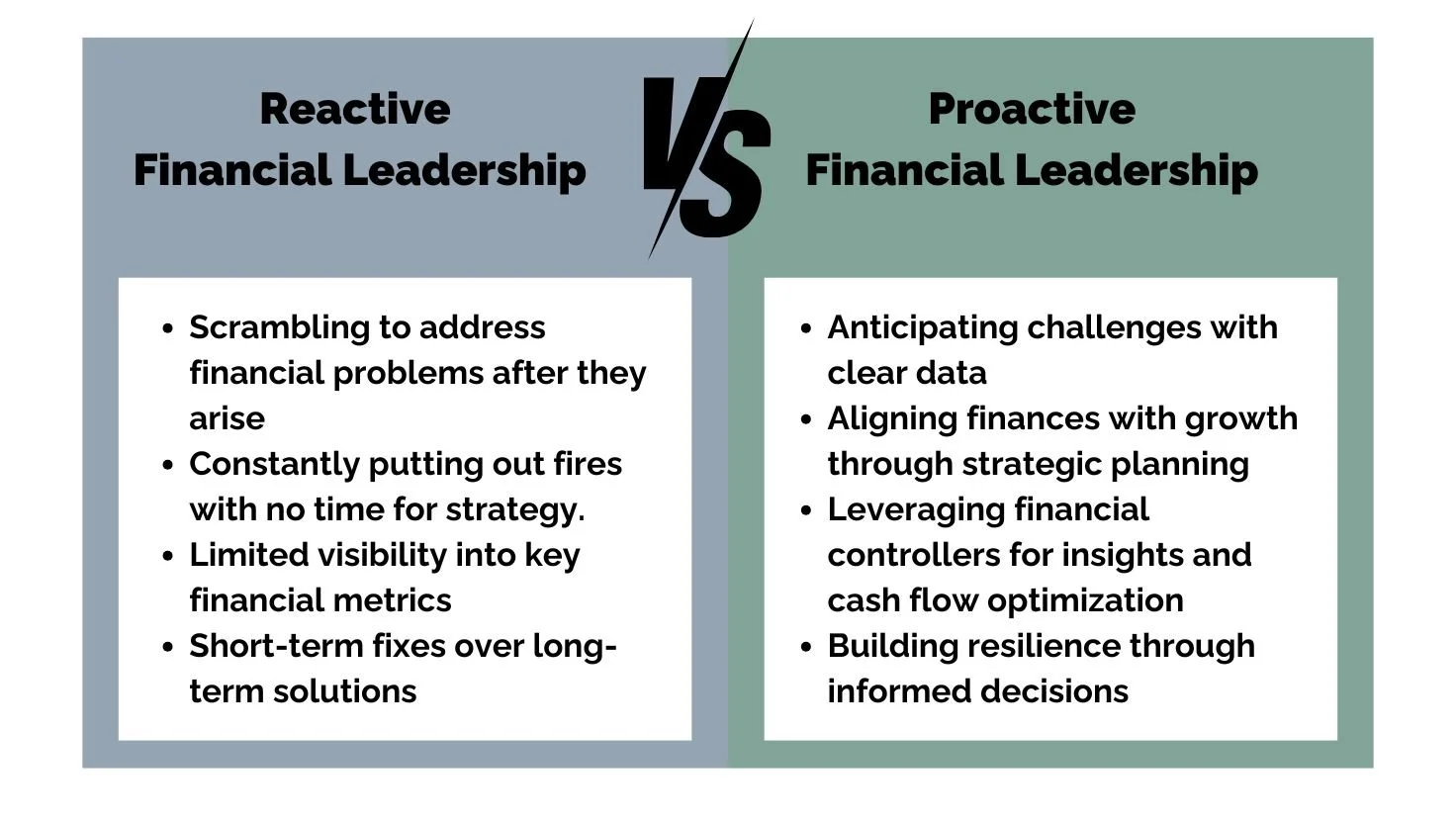
3. Are You Leading Proactively or Reactively?
This is where everything comes together. Businesses that constantly react to problems rarely have time to focus on long-term growth. They're responding to cash shortages, unexpected expenses, staffing issues, or operational challenges as they happen.
Proactive businesses operate differently. They forecast cash flow before it becomes a problem. They compare performance against meaningful benchmarks. They understand how today's decisions will affect the months ahead.
Most importantly, they make financial decisions that support the goals they've already identified rather than simply responding to whatever happens next.
We've explored this idea further in Why Million-Dollar Businesses Struggle With Cash Flow (And How to Fix It), where we look at why financial clarity allows business owners to anticipate problems instead of constantly reacting to them.
The businesses that grow most sustainably aren't necessarily the ones generating the most revenue. They're the ones making consistent decisions based on reliable financial information.
Bringing Your Purpose and Your Numbers Together
One of the things I enjoy most about working with business owners is helping them reconnect their financial strategy to the reason they started the business in the first place. Because that's what financial leadership should do.
It shouldn't simply tell you what happened last month. It should help you make better decisions about what's next.
If your financial systems aren't giving you the clarity to confidently pursue your long-term goals, our Financial Controller Review is designed for exactly that conversation. Together, we'll evaluate whether your financial reporting, systems, and processes are supporting the business you're trying to build—not just documenting where you've been.
Not quite ready for a full review? Our free AI Financial Health Scanner is a practical place to start. In just a few minutes, it can help you identify where your financial systems are strong and where opportunities for stronger financial leadership may exist.